Daucus Carota L.
Family: Apiaceae (Umbelliferae), also known as the family of umbelliferae.
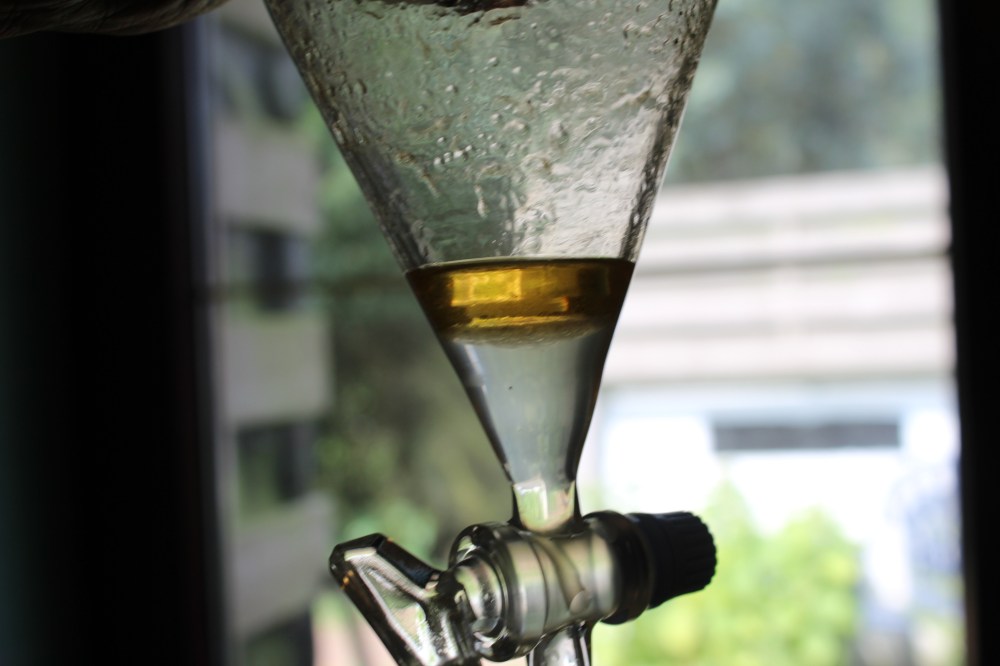
Parts used: Crushed dried seeds. The oil is obtained through steam distillation.
Description: The oil of Daucus carota L. is a yellow or amber to pale orange-brown liquid with a pungent, dry, earthy odor that somewhat resembles sandalwood. In the perfume industry, it is classified as a middle note and is commonly used in natural perfumes.
Additional uses: Apart from the essential oil derived from Daucus carota L., an oil can also be obtained from the edible carrot variety through solvent extraction. This carrot oil is widely used in the cosmetic industry as a coloring agent. Furthermore, a root macerate is produced as a base oil, which is rich in beta-carotene, a beneficial compound.
Essential oil content: The essential oil of Daucus carota L. contains approximately 1.5% of the total oil content. It takes approximately 75-100 kilograms of carrot seeds to produce 1 kilogram of the essential oil.
Variations in composition: The oil can be distilled from both wild and cultivated carrots. The oil obtained from wild carrot can contain up to 75% carotol, which is a sesquiterpenol compound. On the other hand, the oil extracted from cultivated carrots typically contains up to 50% carotol.
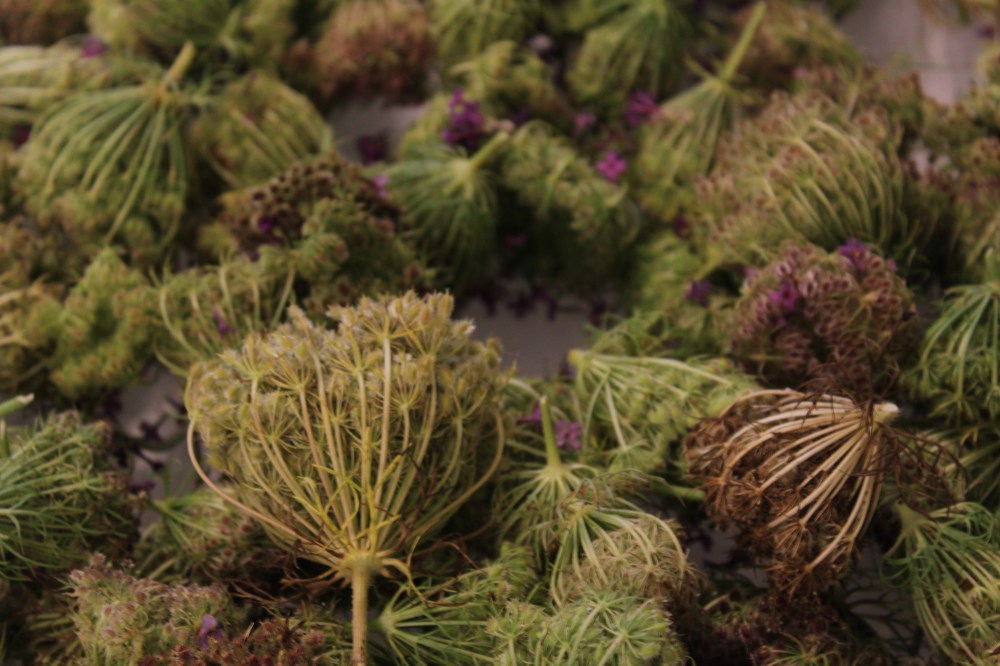
The oil has a pungent, dry, earthy odor similar to sandalwood. The oil’s content varies depending on the source, with wild carrot oil containing higher amounts of carotol compared to cultivated carrot oil.
The carrot is a vegetable known for its high content of beta–carotene, which is converted into vitamin A in the body. In its wild form, it can be found growing in dry grasslands, roadsides, dikes, and dunes.
The wild carrot, also known as Lace flower, has flowers with a distinctive dark red spot in the center, resembling lace. Unlike the cultivated carrots we are familiar with, the original wild carrot was thin, tough, sinewy, and came in various colors ranging from white to purple, rather than the orange color we commonly associate with carrots today.
The carrot plant has a straight stem with grooved, hard, and hairy leaves. The leaves are finely divided, with the lower ones being larger than the upper ones.
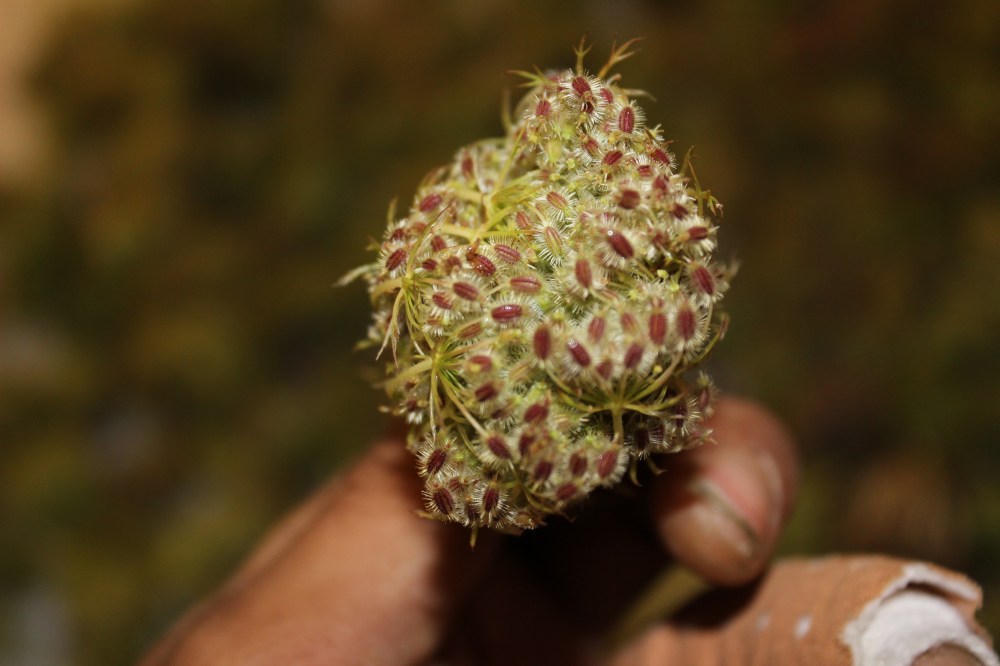
It is an annual or biennial herb with a small, tough, whitish root. The plant can grow up to 1.5 meters in height and produces white lace-like flowers. The flowers are small, numerous, and mostly white, with the central flower being red or violet. The fruit of the plant is elliptic, measuring around 2-3 mm in length. In the first year, the plant stores nutrients in its root, and in the second year, it flowers from June to August, with the seeds ripening from August to September. The fragrant flowers are hermaphrodites, possessing both male and female reproductive organs, and they are typically pollinated by flies and beetles. The plant is capable of self-fertilization. It thrives in well-drained sandy, loamy, or clay soil. It does not grow well in shaded areas and requires moist soil. A single plant can produce around 3000 seeds, which germinate in the spring.
The essential oil is extracted from the dried seeds of the plant. The seeds have an orange color and yield an essential oil with a dry, woody scent accompanied by an earthy note.
While the root of the carrot is commonly consumed as a vegetable, both raw and cooked in salads and other dishes, it also possesses medicinal properties. It is known to have a strong tonic effect on the liver and bile, making it beneficial against jaundice and other related conditions. The plant has diuretic and stimulant properties, which can aid in treating dropsy, kidney disease, bladder infections, and flatulence. Additionally, it is believed to have cancer preventive effects due to the presence of b–sitosterol in the root, which has shown activity against certain tumor.
Medicinal Properties
The seeds of the carrot plant have several medicinal properties. They are known for their carminative and stimulating effects, which can help alleviate flatulence, dysentery, chronic cough, jaundice, and intestinal obstructions. The seeds are also believed to have emmenagogue properties, aiding in menstrual flow. In some regions, such as Pennsylvania, the seeds are chewed and used as a contraceptive.
The root of the carrot plant is rich in vitamins, minerals, carbohydrates, Potassium, fiber, protein, and other beneficial compounds. It has been used in folk medicine worldwide. Infusions of the root have been traditionally used as laxatives.
Carrot oil is highly regarded for its beneficial effects on the skin. It acts as a tonic, supporting the healing process of skin conditions and assisting in the prevention of unsightly scar tissue. It is particularly valuable in restoring deficient liver functions associated with viral hepatitis and liver cirrhosis. Carrot oil is often used in combination with other essential oils like Ledum and Thyme ct. thuyanol to enhance its effects. In skincare, it is commonly employed to improve the elasticity and quality of the skin and reduce imperfections.
Carrot oil is not only utilized in skincare but also serves as a fragrance component in soaps, cosmetics, perfumes, detergents, seasonings, and foods. Carrots can be consumed in various forms, including as a drink, grated in salads, cooked as a vegetable, or used in soups. These preparations are believed to be beneficial for conditions such as anemia, liver and intestinal complaints, skin diseases, and mineral deficiencies. It is advisable to brush carrots instead of scraping or peeling them, as the most active substances are present in the outer layers. When used together with cedarwood oil, carrot seed oil shares similarities with Florentine orris.
Active ingredients in carrot essential oil include:
- Essential oils: These include a-pinene (9.5%), camphene (0.5%), sabinene (9.2%), b-pinene (1.6%), myrcene (2%), carotol (21%), daucol (0.27%), limonene (1%), linalol (0.4%), a-bisabolene (3.5%), elemene, geraniol (4%), geranyl acetate (4.2%), daucene (2.7%), a-cedrene (1.85%), cis-b-farnesene (1%), beta-caryophyllene (8.4%), trans-b-farnesene (3.2%), b-bisabolene (3.9%), and other balsamic substances.
- Other substances found in the whole plant: These include 2-octanone, a-curcumene, a-gurjunene, a-linolenic acid, asaraldehyde, asarone, azulene, bergamotene, b-ionone, b-selinene, camphor, carvone, citral, citronellyl acetate, cuminaldehyde, daucarin, daucene, delta-3-carene, elemicin, eugenol, geraniol, geranyl-acetone, p-cymene-8-ol, trans-beta-bergaptene, geranylformate, camphorol, and asarone.
Carrot essential oil also contains provitamins A, B1, B2, D, E, and C, as well as flavonoids, coumarins, and minerals.
The oil is used to address nutritional disorders in infants and to combat vitamin A deficiency. It is also sometimes used as an anthelmintic (against worms) and has diuretic, strengthening, and sedative properties.
The composition of carrot seed oil obtained through steam distillation according to David Stewart is as follows:
- Alcohols: 29-47%
- Carotol: 30-55%
- Daucol: 3-4%
- Linalol: 2-3%
- Geraniol: 0-1%
- Monoterpenes: 20-24%
- A-pinene: 11-13%
- Sabinene: 9-11%
- Sesquiterpenes: 14-18%
- B-bisabolene: 8-10%
- B-caryophyllene: 4-5%
- Daucene: 2-3%
- Oxides: 3-5%
- Caryophyllene oxide
- Esters: 2-4%
- Geranyl acetate
- Tetraterpenes: 1-3%
- A-carotene: 1%
- B-carotene, y-carotene, g-carotene, lycopene: 0-1%
- Phenols: 1-2%
- B-saron: 1-2%
Benifits and Applications
Carrot oil has various beneficial properties and applications:
- Anthelmintic: It helps in the expulsion of intestinal parasites.
- Antioxidant: Carrot oil contains antioxidants that protect against cellular damage caused by free radicals.
- Antiseptic: It has antiseptic properties and can be used to clean and disinfect wounds.
- Frostbite and cold: Carrot oil can be used topically to help alleviate symptoms of frostbite and provide relief from cold-related discomfort.
- Cystitis: It may be helpful in managing inflammation and discomfort associated with cystitis.
- Anemia: Carrot oil is believed to be beneficial in cases of anemia due to its high content of provitamin A and other nutrients.
- Burns: It can be used topically to soothe and promote healing in minor burns.
- Carminative: Carrot oil aids in relieving flatulence and supporting healthy digestion.
- Catarrh: It may help alleviate symptoms of catarrh, such as excess mucus production.
- Diarrhea in children: Carrot oil can be used in cases of diarrhea in children, as it has soothing and digestive properties.
- Diuretic: It promotes urine production and can assist in flushing out toxins and supporting kidney health.
- Eczema and skin rash: Carrot oil has soothing properties and may help reduce inflammation and itching associated with eczema and skin rashes.
- Gout: It may help reduce symptoms of gout, such as joint pain and inflammation.
- Liver complaints and recovery: Carrot oil supports liver health and can aid in the recovery process.
- Stomach and intestinal disorders: It can help soothe and regulate digestive issues, such as stomach and intestinal disorders.
- Menstruation, irregular: Carrot oil may have a regulating effect on the menstrual cycle.
- Renal insufficiency: It can support kidney function and help manage renal insufficiency.
- Neurotonic: Carrot oil has properties that support and stimulate the nervous system.
- Premenstrual syndrome (PMS): It may help alleviate symptoms associated with PMS, such as mood swings and bloating.
- Psoriasis: Carrot oil can be beneficial in managing symptoms of psoriasis, such as redness and flaking.
- Wrinkles: It is often used in skincare for its potential to improve skin elasticity and reduce the appearance of wrinkles.
- Stimulating bile secretion: Carrot oil promotes the secretion of bile, aiding in digestion.
- Tonic: It has a toning effect on the body, promoting overall well-being.
- Vasodilator: Carrot oil can help dilate blood vessels, improving blood circulation.
- Anti–scalding and sun protection: It may provide some relief for scalding or sunburned skin.
- Vermifuge: Carrot oil can be used to help expel worms from the intestines.
- Nervine: It has a calming and soothing effect on the nerves.
- Purifying for liver and kidneys: Carrot oil aids in detoxification and purification of the liver and kidneys.
- Swelling: It can help reduce swelling and inflammation.
- Ulcers: Carrot oil may have a soothing effect on ulcers.
Skin care:
- Older skin: It can help revitalize and nourish aging skin.
- Vitalizing: Carrot oil promotes skin vitality and radiance.
- Nourishing: It provides essential nutrients to the skin, keeping it healthy and nourished.
- Tonic: Carrot oil has a toning effect on the skin, helping to improve its overall appearance.
- Elasticity: It supports and improves skin elasticity, helping to reduce sagging and wrinkles.
- Scars: Carrot oil may assist in the healing process of scars and promote their fading over time.
- Skin hardening: It can help soften and moisturize dry and hardened skin.
- Wrinkles: Carrot oil is often used to reduce the appearance of wrinkles and fine lines.
- Rosacea: It may help calm and reduce redness associated with rosacea.
- Skin inflammations: Carrot oil has anti-inflammatory properties and can help soothe various skin inflammations.
- Eczema: It can alleviate itching and inflammation associated with eczema.
- Burns: Carrot oil has soothing and regenerative properties that can aid in the healing of burns.
- Purifies the skin: Carrot oil’s detoxifying effect on the liver can contribute to purifying the skin.
- Liver support: Carrot oil supports liver health, which can indirectly improve skin conditions.
- Increased red blood cells: Carrot oil may have a positive effect on red blood cell production.
Research:
There is research suggesting that the substance falcarinol found in carrots may inhibit tumor growth in rats. This study was published in the Journal of Agricultural and Food Chemistry and conducted by researchers at Newcastle University, led by Kirsten Brandt.
Internal:
Carrot oil can be used internally for various purposes, including the following conditions: anemia, disorders in the lymphatic system, respiratory disorders characterized by lung decay, liver and gallbladder disorders, rheumatism, arthritis, gout, skin diseases, and intestinal infections. The recommended dosage is 3 drops, three times a day, taken after meals.
Mental:
Carrot oil has mental benefits as well. It strengthens inner vision and helps in recognizing truth during times of doubt and confusion. It clears blockages that hinder the smooth flow of energy, particularly between the solar plexus and the heart chakra. Additionally, it has a soothing effect on the environment.
Combination:
Carrot oil can be combined with other essential oils to enhance its effects. It blends well with oils such as cassia, cypress, costus, cedarwood, geranium, juniper, lavender, mimosa, citrus and spice oils, rose, rosemary, sandalwood, and fennel.
Contraindications:
There are a few contraindications to keep in mind when using carrot oil. It promotes menstruation, so it should not be used during pregnancy. Excessive use can be toxic, leading to the palms and soles of the feet turning orange and the skin becoming scaly. Carrot oil is not suitable for children. While it is generally non-irritating and does not cause hypersensitivity, it should be avoided by individuals with high blood pressure due to its potential to increase blood pressure.
Applications:
- For protection against cold weather: Mix 10 drops of carrot oil with 10 ml of almond oil and apply it to the face and hands in cold weather.
- For frostbite, including severe cases: Mix 25-50 drops of carrot oil with 50 ml of St. John’s wort oil and massage the affected areas.
- For ulcers: Apply 2 drops of carrot oil to a damp cotton ball and place it on the ulcer for a period of time.
- For itching associated with psoriasis and eczema: Mix 5-10 drops of carrot oil with a tablespoon of jojoba oil and apply it to the itchy areas as needed.
- Inhalation for stress, nervous tension, exhaustion, and restlessness: Carrot oil can be diffused or inhaled in combination with oils such as cedar, palmarosa, and geranium.
- Skin care: Carrot oil can be used for scar treatment, nourishing the skin, vitalizing the skin, reducing wrinkles, soothing inflammation, and managing eczema.
 Herbal Panda
You must be logged in to post a comment.