Lavandula Angustifolia
(Synonyms: Lavandula officinalis)
Family: Lamiaceae
Part Used: Flowering tops, with flowers cut off before budding.
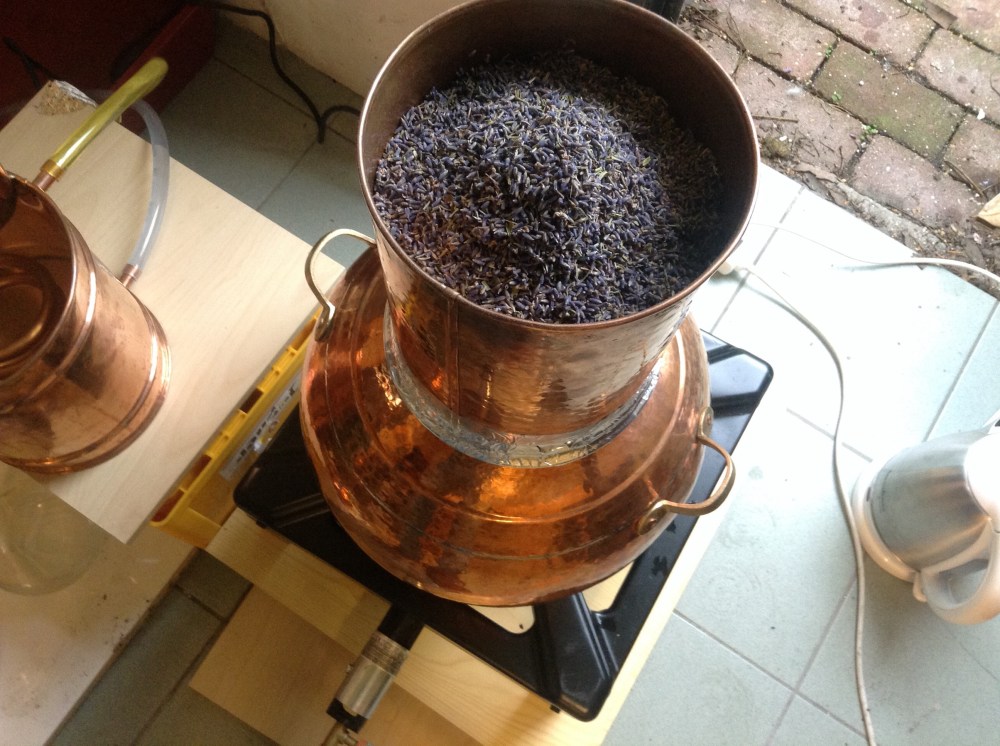
Lavender essential oil is obtained through steam distillation of the flowering tops. It is a colorless to pale yellow liquid with a sweet floral-spicy scent, along with balsamic and woody undertones. In addition to the essential oil, smaller quantities of absolute and concrete are produced through solution extraction. The absolute is a dark green viscous liquid with a sweet floral-spicy odor.
The lavender flowers are harvested in the bud stage, as the oil is not only present in the upper lip of the crown but also in the calyx. This ensures the maximum oil content in the harvested flowers.
The name lavender is derived from the Latin word “lavare,” meaning “to wash,” and “angustifolia” refers to the narrow leaves of the plant. The name Lavandula angustifolia indicates the specific species with narrow leaves.
Lavandula angustifolia, also known as true lavender, grows in the wild at altitudes ranging from 900 to 1800 meters. Approximately 21,000 hectares of land are dedicated to lavender cultivation each year, with 4,000 hectares specifically for Lavandula angustifolia and 17,000 hectares for lavandin, another lavender species.
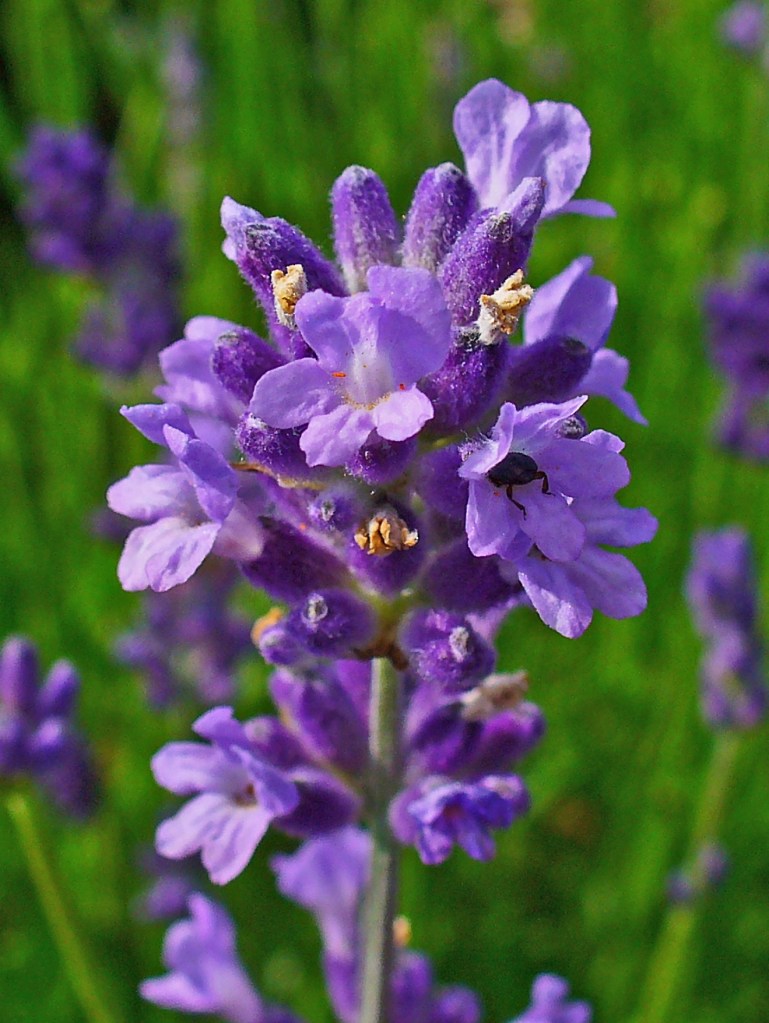
Lavender plants produce flowering stems adorned with elongated leaves. From the leaf axils, small bunches of leaves emerge, gradually diminishing in size towards the top until they disappear. Eventually, the flowering stem shoots up, forming whorls of flowers. Each stem typically consists of four tiers, with six to ten flowers per tier.
In ornamental gardens, it is advisable to renew lavender plants every 2-3 years, as they have a relatively short lifespan as ornamental plants, especially if their specific growing conditions are not met. However, under favorable conditions, Lavandula angustifolia, being a woody shrub, can live up to thirty years. Over time, the plant becomes increasingly woody and loses some of its aesthetic appeal. Propagation of lavender plants can be done through sowing, cuttings, or division.
Lavender has been utilized for thousands of years for its fragrance and its various medicinal properties. It has been valued for its disinfectant effect on wounds, as a sedative, stimulant, tonic, and carminative (relieving flatulence and promoting digestion). Lavender sachets were commonly placed in chests and cupboards for their pleasant scent. Lavender oil was employed to repel lice by rubbing it on bedsteads. Additionally, lavender has a long history of being used to treat sword wounds and burns due to its medicinal, analgesic, and healing properties.
In rural areas, hunters traditionally carry a sprig of lavender with them. If their dog is bitten by a venomous snake, they finely crush the plant and apply it to the bite to counteract the effects of the venom.
History
Lavender has a rich historical background and has been cherished for its various uses and properties throughout different civilizations.
The Greeks and Romans were already fond of lavender as a bathing agent (lavare means to wash). Lavender was also widely utilized in the East, with records dating back 4000 years before Christ. In fact, a jar of lavender was discovered in the tomb of Tutankhamen, showcasing the ancient Egyptians’ appreciation for the herb. By the first century AD, the medicinal use of lavender was documented by Pandanius Dioscorides. Lavender was even used by the Romans to treat their exhausted and wounded soldiers. Emperor Caligula believed that aromatic lavender baths enhanced his potency. Lavender was frequently burned as an offering to the gods by the Romans. The Romans also created a perfume called “nardinum,” which consisted of lavender, myrrh, and finely ground lilies. Lavender was highly valued and expensive during Roman times, with blossoms being sold for 100 denarii per pound, equivalent to several months’ wages for a farm laborer. Lavender was primarily accessible to the wealthy elite. The Romans introduced lavender and other herbs to England. Lavender is also mentioned in the Bible, where Queen Sheba is said to have offered King Solomon myrrh, frankincense, and lavender. Lavender oil was used to anoint her body, and lavender played a role in the story of Holofernes, the Assyrian commander, as he was seduced and killed.
The name “lavindula” appears in a German recipe from the ninth century. In a herb book from 1420 by Benedetto Rinio, it is mentioned that lavender is beneficial for relieving limb pain when used in baths. In a German text from 1485 called “Gart der Gesundheit,” the name lavender is explained as a combination of wax and sweetness. It is also referred to as a love plant. During the Middle Ages, lavender was used as a deodorizer and insecticide. Monks cultivated lavender extensively and used it in cooking and medicine. Lavender flowers were hung on front doors as protection against death, and in Ireland, young girls were advised to wear a lavender garter to ward off witches’ spells. There are stories suggesting that people who frequently handled lavender were immune to the plague.
This was observed in Grasse, where glove makers used lavender and other perfumes for the leather gloves of nobles from European courts. Lavender was also used as a strewing herb in Northern Europe, sprinkled on floors to repel vermin, flies, lice, mosquitoes, moths, and more. Lavender was associated with Hecate, the goddess of the underworld, in warding off the evil eye. Hildegard von Bingen, in her 12th-century herbal guide, recommended lavender for lung problems (as a tea with honey), for maintaining purity of character, and as a scent to combat lice and headaches. In the Middle Ages, lavender was primarily used for medicinal and cosmetic purposes, rather than in cooking, possibly due to its bitter taste caused by tanning agents. Lavender has a long-standing tradition in English perfumery and home remedies. Women in the late 16th century sewed lavender sachets into their dresses, and to this day, lavender sachets are used in linen closets. Dodoens, in 1644, mentioned that lavender is placed with linen for its pleasant fragrance and its ability to repel moths. The Pharmacopoeia of 1747 describes lavender flowers as having a head-strengthening, antispasmodic, and sleep-inducing power.
Lavender offers a range of benefits and is utilized in various forms for different purposes. Flower water derived from lavender is considered innovative for skin cells and is particularly effective against acne. Lavender tea is known to provide relief from headaches, anxiety, flatulence, nausea, dizziness, and bad breath. Twigs with lavender flowers act as a natural defense against flies, especially Lavandula latifolia. Lavender is also used as a moth repellent and is valued for its fragrance in linen closets. The essential oil extracted from lavender is highly prized in the perfume industry, aromatherapy, and medicine. Lavender possesses antiseptic, anesthetic, and analgesic properties. The finest quality oil is obtained from Lavandula stoechas and Lavandula angustifolia.
Lavender has a pleasant aroma and possesses calming and medicinal properties. In the regions surrounding the Mediterranean, lavender spikes are believed to possess special powers, bringing prosperity, fertility, and wealth. Lavender is employed in the production of sedatives, painkillers, insect bite creams, antiseptics, and wound healing products. It serves as a soothing after-sun remedy by adding a few drops of lavender to baby lotion. For its sedative effects, three drops of lavender can be added to a small amount of wheat germ oil and massaged onto the neck, just below the skull. The massage should be performed from the top of the neck, moving downward to the shoulders.
Active ingredients
Lavandula angustifolia, the plant from which lavender oil is derived, exhibits versatility due to its complex chemical structure, comprising more than 100 constituents. Some of the active ingredients found in lavender oil are:
- Monoterpenes: These include a-pinene (0.6%), sabinene, beta-pinene (0.2%), camphene (0.3%), delta-3-carene (0.3%), cis-ocimene (2.4%), trans-ocimene (1.5%), allo-ocimene (0.6%), and limonene (0.7%).
- Sesquiterpenes: Lavender oil contains sesquiterpenes such as a-santalene, b-phellandrene, delta-cadinene, g-cadinene, beta-caryophyllene (1%), and beta-farnesene (1.2%).
- Non-terpenic alcohols and regular and non-regular monoterpenes: Lavender oil contains cis-3-hexen-1-ol, 1-octen-3-ol, linalool (32-42%), terpin-1-ol-4 (2.8-3.6%), a-terpineol (1.2%), borneol (1.4%), citronellol, geraniol (0.9%), and lavender (1.3%).
- Esters: Notable esters found in lavender oil include linalyl acetate (42-52%), terpenyl acetate (0.5%), lavendulyl acetate (4%), bornyl acetate, geranyl acetate (0.5%), and geranyl butyrate.
- Acids: Lavender oil contains 1,8-cineol (2.3%), betulinic acid, rosmarinic acid, linalool oxide, and caryophyllene oxide.
- Ketones: The ketones found in lavender oil include 1-octen-3-one (1.3%), p-methyl-acetophenone, and camphor.
- Aldehydes: Lavender oil contains trans-2-hexanal (0.4%), cuminaldehyde (0.4%), benzaldehyde (0.26%), isovaleraldehyde, neral, geranial, and myrtenal.
- Lactones: Lavender oil contains butanolides.
- Coumarins: Coumarin, herniarin, omnibelliferone, and santonin are coumarins found in lavender oil.
- Other components: Lavender oil also contains the acetate of 2,6 dimethyl-3,7 octadin-2-ol-6-yle.

Specific properties: Lavender (Lavandula angustifolia) has a wide range of therapeutic benefits and is known for its versatile nature. Some of its specific properties include:
- Abscess: Lavender oil can be beneficial in treating abscesses.
- Acne: Lavender oil is known for its effectiveness in combating acne.
- Varicose veins: Lavender oil can help reduce inflammation in the veins.
- Allergies: Lavender oil may provide relief from allergic reactions.
- Anxiety: Lavender oil has strong calming properties and can help alleviate anxiety.
- Analgesic: Lavender oil has pain-relieving properties and can be used for conditions such as arthritis, muscle pain, and rheumatism.
- Angina: Lavender oil can help relieve the symptoms of angina.
- Antibacterial (Staph. aureus): Lavender oil exhibits antibacterial properties against Staphylococcus aureus.
- Anticoagulant (mild): Lavender oil has mild anticoagulant properties.
- Anticonvulsant: Lavender oil can help reduce seizures and convulsions.
- Antidepressant: Lavender oil has mood-enhancing properties and can help alleviate symptoms of depression.
- Antidote: Lavender oil may have detoxifying properties.
- Antifungal: Lavender oil can be effective against fungal infections such as Candida, Tinea pedis (athlete’s foot), and nail infections.
- Anti-inflammatory: Lavender oil has anti-inflammatory properties and can be beneficial for conditions such as eczema, insect bites, phlebitis, sinusitis, otitis, cystitis, bruising, acne, and itching.
- Antimicrobial: Lavender oil exhibits broad-spectrum antimicrobial activity.
- Antiphlogistic: Lavender oil has anti-inflammatory properties.
- Antirheumatic: Lavender oil can help alleviate symptoms of rheumatism.
- Antiseptic: Lavender oil has antiseptic properties and can be used for acne, bronchial secretions, cystitis, otitis, infectious skin conditions, flu, sinusitis, and tuberculosis.
- Antispasmodic: Lavender oil has muscle-relaxing properties and can help relieve spasms and spasmodic coughs.
- Asthma: Lavender oil can be beneficial for managing asthma symptoms.
- Balancing: Lavender oil can help balance the central nervous system.
- Bladder inflammation: Lavender oil may help reduce inflammation in the bladder.
- Bruises: Lavender oil can aid in the healing of bruises.
- Blood circulation: Lavender oil promotes blood circulation.
- Blood pressure (lowering): Lavender oil has the potential to lower blood pressure.
- Hemostatic: Lavender oil can help stop bleeding.
- Nausea: Lavender oil can help alleviate feelings of nausea.
- Burns: Lavender oil has strong soothing and healing properties and can be used for burns.
- Bronchitis (asthmatic): Lavender oil can help alleviate symptoms of asthmatic bronchitis.
- Abdominal cramps: Lavender oil may help relieve abdominal cramps.
- Cardiotonic (for tachycardia): Lavender oil can help regulate heart function in cases of tachycardia (rapid heart rate).
- Carminative: Lavender oil can help relieve colic and flatulence.
- Cholagogue: Lavender oil stimulates the production and release of bile from the gallbladder.
- Choleretic: Lavender oil promotes the production and flow of bile.
- Cicatrizing: Lavender oil aids in wound healing, ulcer healing, scar reduction, and healing of burns.
- Cytophylactic: Lavender oil stimulates cell regeneration and growth.
- Digestive problems: Lavender oil can be beneficial for general digestive issues, inflammations, catarrh, and poisoning.
- Depression: Lavender oil can help alleviate symptoms of depression.
- Dermatitis: Lavender oil can be used for the treatment of dermatitis.
- Diuretic: Lavender oil promotes urine production and can aid in detoxification.
- Dyspepsia: Lavender oil can help alleviate symptoms of dyspepsia (indigestion).
- Dysmenorrhea: Lavender oil can help relieve symptoms of painful menstruation.
- Eczema: Lavender oil is effective in treating eczema.
- Emmenagogue: Lavender oil can help regulate and stimulate menstruation in cases of irregular periods.
- Epithelial stimulant: Lavender oil promotes the growth and repair of epithelial cells.
- Expectorant: Lavender oil can help expel phlegm and mucus from the respiratory system.
- Flatulence: Lavender oil can help relieve flatulence.
- Phlebitis: Lavender oil can help reduce inflammation in the veins.
- Flu: Lavender oil can be beneficial in managing flu symptoms.
- Hair care (dandruff): Lavender oil can be used to address dandruff issues.
- Halitosis: Lavender oil can help combat bad breath.
- Cardiac stimulant (heart palpitations, cramps, weakness): Lavender oil can stimulate and support heart function in cases of palpitations, cramps, and weakness.
- Herpes: Lavender oil may provide relief from herpes symptoms.
- Headache: Lavender oil can help alleviate headaches.
- Skin care: Lavender oil is beneficial for overall skin health and can be used in various skincare products.
- Hypotensive (hypertension): Lavender oil has the potential to lower blood pressure in cases of hypertension.
- Insect bites/stings: Lavender oil can help alleviate the discomfort caused by insect bites and stings.
- Sciatica: Lavender oil can provide relief from sciatic nerve pain.
- Itching: Lavender oil can help relieve itching sensations.
- Gout: Lavender oil can provide relief from gout symptoms.
- Calming (heart): Lavender oil has a calming effect on the heart.
- Throat infections: Lavender oil can help alleviate throat infections.
- Whooping cough: Lavender oil can be beneficial for managing symptoms of whooping cough.
- Bruises: Lavender oil can aid in the healing of bruises.
- Colic: Lavender oil can help relieve colic pain.
- Fever-reducing: Lavender oil can help lower fever.
- Antispasmodic (strong): Lavender oil has potent muscle-relaxing properties.
- Laryngitis: Lavender oil can be beneficial in treating laryngitis.
- Lice: Lavender oil can be used to combat lice infestations.
- Lumbago: Lavender oil can provide relief from lower back pain.
- Migraine: Lavender oil can help alleviate migraine symptoms.
- Nervousness: Lavender oil can help reduce feelings of nervousness.
- Neuralgia: Lavender oil can help alleviate nerve pain.
- Relaxing: Lavender oil has a relaxing effect.
- Anti-inflammatory (strong): Lavender oil has potent anti-inflammatory properties.
- Earache: Lavender oil can help alleviate earache symptoms.
- Parasiticide: Lavender oil can be effective against parasites.
- Psoriasis: Lavender oil can be beneficial in managing psoriasis.
- Acne: Lavender oil can be used for treating acne.
- Analgesic: Lavender oil has pain-relieving properties.
- Ringworm: Lavender oil can help treat ringworm infections.
- Sedative (calming, headache, restlessness, insomnia, sleep issues): Lavender oil has sedative properties and can help with conditions such as headaches, restlessness, insomnia, and sleep problems.
- Shock: Lavender oil can help alleviate symptoms of shock.
- Sleep disorders: Lavender oil can be beneficial for sleep disorders.
- Insomnia: Lavender oil can help alleviate insomnia symptoms.
- Mucous membrane inflammation: Lavender oil can help reduce inflammation of mucous membranes.
- Strong spasmolytic: Lavender oil has potent muscle-relaxing properties.
- Muscle relaxation: Lavender oil promotes muscle relaxation.
- Muscle pain: Lavender oil can help relieve muscle pain.
- Boils (furuncles): Lavender oil can aid in the healing of boils.
- Stomachic: Lavender oil aids digestion.
- Tachycardia: Lavender oil can help regulate heart rate in cases of tachycardia.
- Tonic (general, energetic, heart, weakness, melancholy): Lavender oil has a tonic effect on the body, promoting overall well-being and providing energy. It can also strengthen the heart and help alleviate feelings of weakness and melancholy.
- Common cold: Lavender oil can provide relief from symptoms of the common cold.
- Paralysis: Lavender oil may help with paralysis symptoms.
- Sprains/strains: Lavender oil can help with the healing of sprains and strains.
- Vertigo: Lavender oil can help alleviate symptoms of vertigo.
- Chilblains: Lavender oil can provide relief from chilblains (inflammation of hands and feet due to cold exposure).
- Wound healing (moderate): Lavender oil promotes wound healing.
- Expelling worms: Lavender oil can help expel worms.
- Nervous system regulation: Lavender oil helps regulate the nervous system.
- Nerve tonic: Lavender oil strengthens and supports the nerves.
- Sunburn: Lavender oil can provide relief from sunburn.
- Diaphoretic: Lavender oil promotes sweating.
- Athlete’s foot: Lavender oil can be used to treat athlete’s foot.
- Ulcers: Lavender oil can aid in the healing of ulcers.
Lavender calms the central nervous system and the respiratory system, acts as a mild sedative, and has properties that promote bile flow. It is important to use low doses for psychological reasons, as high doses may cause restlessness and insomnia.
Effects and Application
Mental
- Soothing and refreshing for the mind: Lavender oil has a calming effect on the mind, promoting relaxation and mental clarity.
- Against mental exhaustion: Lavender oil can help combat mental fatigue and restore energy.
- Sleep-promoting: Lavender oil is known for its sleep-inducing properties and can aid in achieving a restful night’s sleep.
- Harmonizing for the cerebral hemispheres: Lavender oil helps balance and harmonize brain activity between the left and right hemispheres.
- Nerve-strengthening: Lavender oil has a strengthening effect on the nerves, promoting their health and function.
Lavender oil is wonderfully relaxing and soothing, making it beneficial for individuals experiencing tension, stress, sadness, and similar emotions. It provides feelings of love, tenderness, and protection against negativity. Lavender oil stimulates thinking and relaxes the nerves. It can help reduce symptoms of depression, calm feelings of melancholy, tension, and anxiety.
Lavender oil is harmonizing and balancing, working to bring equilibrium to the body and mind. It balances both the higher and lower chakras, offering a calming yet energizing effect. Lavender oil facilitates deeper meditation and assists in integrating spirituality into everyday life. It can be vaporized or diffused to cleanse spaces of negative energies and is well-suited for therapy rooms.
Internal use: Lavender oil can be used internally for certain indications, including slightly elevated blood pressure, depression, diarrhea, dizziness, flu, cough, cold sores, migraine, rheumatic complaints, stress, cramps, palpitations, and allergies. It can be taken three times a day, three drops after meals. For consumption, it can be mixed with honey and dissolved in warm milk or herbal tea.
Combinations: Lavender oil blends well with various essential oils, such as Bergamot, Cedarwood, Lemon, Pine, Oakmoss, Eucalyptus, Juniper, Geranium, Chamomile, Clove, Labdanum, Laurel, Neroli, Niaouli, Oregano, Patchouli, Rose, Clary Sage, Orange and other citrus and floral oils.
Contraindications:
- Avoid use during the first months of pregnancy: Lavender oil should not be used during the early stages of pregnancy.
- Slightly promotes menstruation: Lavender oil has a mild menstrual-stimulating effect.
- Non-toxic and non-irritating: Lavender oil is generally safe and well-tolerated.
- Allergies: Some individuals with hay fever or asthma may experience allergies to lavender oil.
- Headaches: An overdose of lavender oil may cause headaches.
- Possible skin irritation: When used in its pure form, lavender oil can cause a burning sensation on the skin.
Applications:
- Burns: For burns, start by cooling the affected area with running water. Then, apply 1-2 drops of lavender oil (optionally mixed with Aloe Vera gel) to the wound. Repeat this process every hour until the pain subsides.
- Insect and animal bites: Apply pure lavender oil directly to the painful area. Alternatively, dampen a cotton ball with 2-3 drops of lavender oil and place it on the injured area. In the case of stings from wasps or bees, remove the stinger and immediately treat the sting with pure lavender oil to help reduce swelling and pain.
- Youth pimples: Prepare a solution by adding 10 drops of lavender oil and 5 drops of camphor to a glass of boiled water. Rinse or dab the skin with this solution twice a day to help alleviate youth pimples.
- Acne or rosacea: Create a mixture by combining 2 drops of lavender oil, 2 drops of lemon oil, 4 drops of helichryse oil, 2 drops of petitgrain oil, and 1 drop of rosemary oil with 2 tablespoons of St. John’s wort oil. Gently massage this mixture onto the affected areas daily to assist in managing acne or rosacea symptoms.
- Eczema: Mix 20-30 drops of lavender oil with 50 ml of a base oil (such as coconut oil or almond oil) and apply it to the eczema-affected areas daily. If the eczema is wet, consider treating it first with aloe vera gel or tea tree oil before applying the lavender oil mixture.
- Sleep disturbances: To promote better sleep, sprinkle 5 drops of lavender oil onto the pillow before bedtime or use a diffuser to evaporate 6-10 drops of lavender oil in the bedroom. The soothing aroma of lavender can help create a calming atmosphere conducive to restful sleep.
 Herbal Panda