Lavandula x intermedia Emeric ex Loisel
Commonly known as Lavandin, is a hybrid of Lavandula angustifolia and Lavandula latifolia.
Lavandin shares similarities with Lavandula angustifolia in its components, effects, and properties. It belongs to the lamiaceae family, and the part of the plant used is the flowers.
Lavandula x intermedia essential oil is a colorless or pale yellow liquid with a fresh camphor-like odor and a spicy undertone. Its scent is less refined compared to true Lavandula angustifolia. In the perfume industry, it is used as both top and middle notes, and Lavandin is extensively utilized in household products such as detergents, soaps, and air fresheners.
The essential oil content in Lavandin is around 1.5-2%, which means that it requires 50-75 kg of flowers to produce 1 kg of essence. Originally from the Mediterranean region, Lavandin has largely replaced Lavandula angustifolia due to its higher yield, although it contains fewer active ingredients.
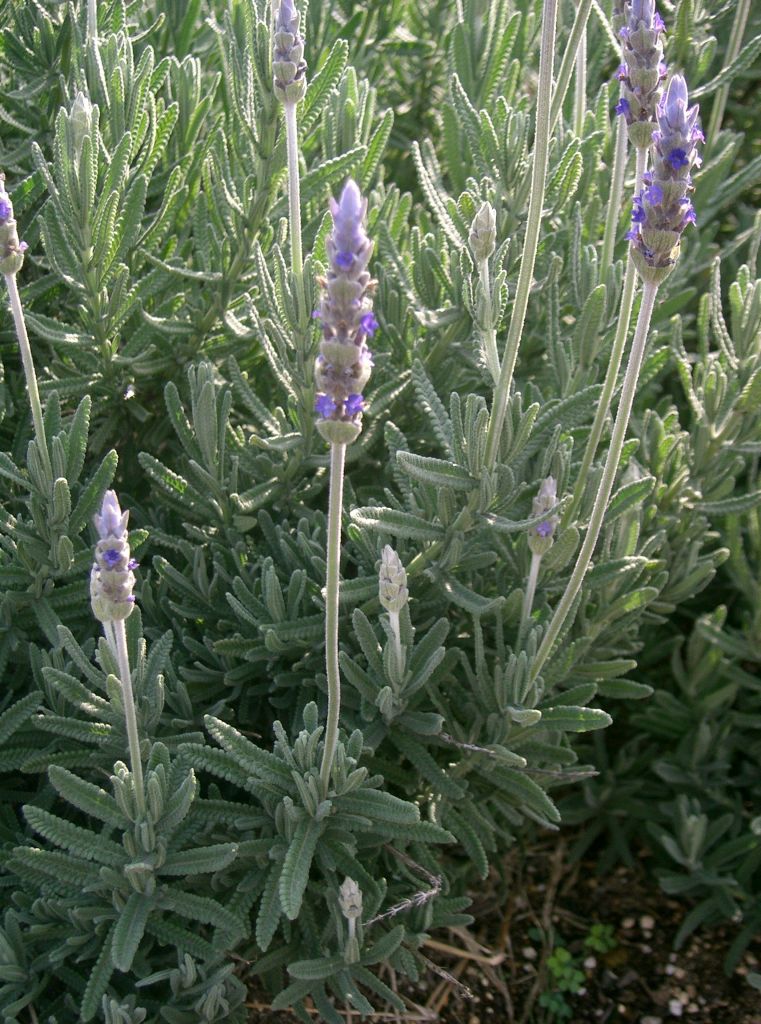
Lavandin is an evergreen woody shrub that can reach up to 1 meter in height and produces beautiful violet-blue flowers. It has spherical inflorescences and long gray-green to gray leaves. The flowering period is from July to September, with seed production occurring from August to October. The flowers are hermaphrodites, and pollination is carried out by bees, moths, and butterflies. The entire plant emits a strong aromatic fragrance. It thrives in stony and barren soils where few other plants can grow. Lavandin is resilient to scorching summer heat and harsh winter storms. Harvesting is typically done around noon, during the peak of the day’s heat. Harvesters separate the blue flowers from the bush with a single stroke of a sickle. The following year, the plant regenerates strongly for another harvest.
Essential Oil
The essential oil of Lavandin is obtained through steam distillation of the flower tops. The resulting oil ranges in color from colorless to yellow and possesses a spicy, woody aroma. Lower-quality grades of Lavandin oil may have a prominent camphor scent. While Lavandin oil’s overall effect is slightly milder compared to true lavender oil, it exhibits greater potency in addressing issues related to breathing and circulation.
Due to its more affordable price, Lavandin oil is commonly employed as a fragrance in various cleaning products. Its distinct scent adds a pleasant aroma to these household items, enhancing the sensory experience during cleaning routines.
Lavandin oil can be effectively combined with a variety of other essential oils to create unique and harmonious aromatic blends. Some recommended combinations include bergamot, cypress, citronella, pine, geranium, chamomile, cinnamon, clove, bay leaf, neroli, oregano, patchouli, rose, rosemary, clary sage, and various citrus oils such as orange.
These combinations offer a wide range of aromatic profiles and therapeutic benefits. They can be used in diffusers, personal care products, massage oils, or aromatherapy blends to create customized scents and promote specific emotional and physical effects. Experimenting with different combinations can lead to delightful and beneficial aromatic experiences.

Active ingredients: The essential oil of lavandin contains a diverse range of compounds that contribute to its aroma and therapeutic properties. Here is a corrected and more detailed list of the active ingredients found in lavandin oil:
Monoterpenes: a-pinene, b-pinene, a-terpinene, myrcene, camphene, limonene, terpinolene, g-terpinene, trans-b-ocimene (2.3%), trans-b-farnesene, sabinene, p-cymene, delta-3-carene, cis-ocimene.
Sesquiterpenes and Terpenols: phellandrene, germacrene-D, d-cadinene, caryophyllene, ar-curcumene, α-santalene, α-cadinene.
Non-terpenic and Terpenic Alcohols: linalool (36%-40%), borneol, geraniol, terpinen-4-ol, lavandulol, a-terpineol, p-cymen-8-ol, nerol, 3-octanol.
Esters and Aldehydes: linalyl acetate (25%-33%), hexyl acetate, geranyl acetate, a-terinyl acetate, lavandinbornyl acetate, neryl acetate, lavandulyl acetate (1.7%), furfural, decanal, hexanal, heptanal, octanal, acetaldehyde, isoveraldenhyde, cuminaldehyde.
Acids: 1,8-cineole (15%), rosmarinic acid, linalool oxide, caryophyllene oxide.
Ketones: camphor (7%), acetone, 3-octanone, crypton, carvone.
Coumarins: herniarin.
These components contribute to the complex and unique scent of lavandin oil, as well as its potential therapeutic effects. Lavandin oil is valued for its relaxing and uplifting properties and is commonly used in aromatherapy, perfumery, and personal care products.
Lavandin essential oil offers a wide range of therapeutic benefits and can be used for various purposes. Here is a corrected and more detailed explanation of its specific applications:
- Allergy relief: Lavandin oil can help alleviate symptoms associated with allergies.
- Analgesic: It has pain-relieving properties, making it useful for reducing pain sensations.
- Anxiety reduction: Lavandin oil has a calming effect and can help reduce anxiety levels.
- Antibacterial: It exhibits antibacterial properties, making it effective against certain bacterial strains.
- Anticatarral: Useful for treating conditions such as bronchitis and rhinopharyngitis that involve excessive mucus.
- Anticoagulant: It has mild anticoagulant properties, which may help prevent blood clot formation.
- Anticonvulsant: Lavandin oil can help reduce the frequency and intensity of seizures.
- Antidepressant: It has mood-enhancing properties and can help alleviate symptoms of depression.
- Antidotic: Lavandin oil can act as an antidote or counteract the effects of certain toxins or poisons.
- Antifungal: Effective against fungal infections, including athlete’s foot and Candida albicans.
- Antirheumatic: It can help reduce symptoms associated with rheumatic conditions, such as joint pain and inflammation.
- Antiseptic: Lavandin oil has antiseptic properties, making it useful for preventing infection.
- Antispasmodic: It helps relax muscle spasms and reduce cramping.
- Antiviral: Effective against certain viruses, including viral enteritis.
- Asthenia relief: Lavandin oil provides a boost of energy and can help combat fatigue.
- Bactericidal: It exhibits strong bactericidal properties, helping to eliminate bacteria.
- Hemorrhage control: Lavandin oil can assist in stopping bleeding.
- Burns treatment: It aids in the healing of burns and promotes tissue regeneration.
- Carminative: It can help alleviate digestive discomfort and promote healthy digestion.
- Cholagogue: Stimulates the release of bile from the gallbladder, aiding digestion.
- Choleretic: Promotes the production and flow of bile, supporting liver function.
- Cicatrisant: Lavandin oil promotes the formation of scar tissue, aiding in wound healing.
- Cordial: It has a stimulating effect on the heart and circulatory system.
- Cytophilactic: Supports the growth and regeneration of cells, beneficial for skin health.
- Deodorant: Lavandin oil helps neutralize and mask unpleasant odors.
- Diarrhea relief: It can help alleviate symptoms of diarrhea.
- Diuretic: Promotes urine production and aids in detoxification.
- Eczema treatment: Lavandin oil can be used to soothe and treat eczema.
- Emmenagogue: It helps regulate and promote menstrual flow.
- Expectorant: Assists in clearing mucus and congestion in the respiratory system.
- Cardiovascular disease prevention: Lavandin oil may help prevent cardiovascular diseases.
- Halitosis control: It can be used to combat bad breath.
- Palpitation support: Lavandin oil can provide relief from palpitations when applied topically.
- Itching relief: Lavandin oil soothes itching sensations, particularly when the skin is not infected.
- Cold sore treatment: It can help alleviate symptoms and promote healing of cold sores.
- Scars treatment: Lavandin oil supports the healing and fading of scars.
- Menstrual problem relief: It can help alleviate menstrual problems and discomfort.
- Migraine relief: Lavandin oil may help reduce the frequency and severity of migraines.
- Nervous disorders: It is beneficial for managing and alleviating symptoms of nervous disorders.
- Nervinum: Lavandin oil has a soothing and calming effect on the nerves.
- Nervousness and stress reduction: Lavandin oil helps relieve nervousness and stress.
- Neurotonic: It acts as a tonic for the nervous system, strengthening and revitalizing it.
- Parasiticide: Lavandin oil can help eliminate parasites.
- Rheumatic complaint relief: It provides relief from symptoms associated with rheumatic conditions.
- Rubefacient: Lavandin oil stimulates blood circulation, resulting in a warming and reddening effect on the skin.
- Rhinopharyngitis relief: Lavandin oil is beneficial for relieving symptoms of rhinopharyngitis.
- Sedative: It has a calming effect and promotes relaxation and sleep.
- Insomnia relief: Lavandin oil can help improve sleep and alleviate insomnia.
- Spasmolytic: It helps relax and relieve muscle spasms.
- Digestive problem relief: Lavandin oil aids in relieving digestive problems.
- Stimulant: It provides a stimulating effect, boosting energy levels.
- Stomachic: Lavandin oil supports healthy stomach function.
- Sudoriferum: Promotes sweating and helps eliminate toxins through the skin.
- Tonic: Lavandin oil acts as a general tonic, benefiting overall health.
- Vermifuge: It can help eliminate intestinal worms.
- Fatigue relief: Lavandin oil combats fatigue and restores energy.
- Vertigo relief: It can help alleviate symptoms of vertigo.
- Wound healing: Lavandin oil aids in the healing of wounds and promotes tissue regeneration.
- Nervine: Lavandin oil supports and strengthens the nervous system.
- Ulcers: It may help with the treatment of ulcers.
Lavandin oil shares many similarities with true lavender (Lavandula angustifolia) and can be used in similar ways. It is commonly used in aromatherapy, skincare, and as a fragrance in various products.
Contraindications:
- Not suitable for use during pregnancy, while nursing, or with young children.
- Lavandin oil can overstimulate the nervous system if used in excessive amounts.
- Generally considered non-toxic, non-irritating, and non-sensitizing.
- Internally using lavandin oil is not recommended for individuals with epilepsy, as it may trigger seizures.
- There is a potential risk of skin irritations due to the presence of cineol and camphor. High doses may lead to headaches and nausea.
Applications:
- For insect bites and animal bites: Apply pure lavandin oil or a mixture of lavandin oil with a base oil or aloe vera gel to the affected area. Alternatively, you can place 2-3 drops on a damp cotton ball and gently apply it to the injured area.
- Bee/wasp stings: Treat the sting immediately with pure lavandin oil to alleviate swelling and pain.
- Moth repellent: Place 3-6 drops of lavandin oil on a tissue or aroma stone and keep it in your wardrobe to repel moths.
- Relaxing evening bath: Create a relaxing bath blend by mixing 4 drops of lavandin oil, 5 drops of bergamot oil, and 2 drops of geranium oil with a teaspoon of honey or a little milk. Add this mixture to your bathwater for a soothing experience.
- Vaporize for a peaceful atmosphere: In an aroma lamp, combine 3 drops of lavandin oil, 3 drops of cedar oil, 3 drops of sandalwood oil, 3 drops of grapefruit oil, and 1 drop of ylang ylang oil to create a calming and peaceful environment.
- Compress for fever, headache, and sunburn: Mix 12 drops of lavandin oil with 1 liter of boiled and cooled water. Dip a small towel into this solution, lightly wring it out, and place it on the affected area. Keep the compress moist for at least 30 minutes to alleviate discomfort.
- Veterinary use: Lavandin oil is used in veterinary medicine for the treatment of scabies and wound care in animals.
 Herbal Panda