Eugenia caryophyllus
is a plant belonging to the Myrtaceae family, native to regions like Zanzibar, Moluccas, Indonesia, and Madagascar. Different parts of the plant, including buds, leaves, bark, and stems, are utilized for various purposes.
The essential oil extracted from clove buds, also known as clovebuds oil, contains approximately 15%-20% oil content. To produce one liter of this essence, it requires 6-9 kilograms of clove buds. The color of the oil ranges from colorless to pale yellow to brown, emanating a pleasant sweet and spicy aroma.
Clove leaf oil is another valuable product, containing about 2-3% essential oil. One of the main components found in both clovebuds and leaf oil is Eugenol, which constitutes around 80% of the oil’s content. The oil is soluble in ethanol 96% but hardly dissolves in water. However, it can mix well with fats and oils. It’s important to note that clove oil is one of the less volatile oils, and it sinks in water.
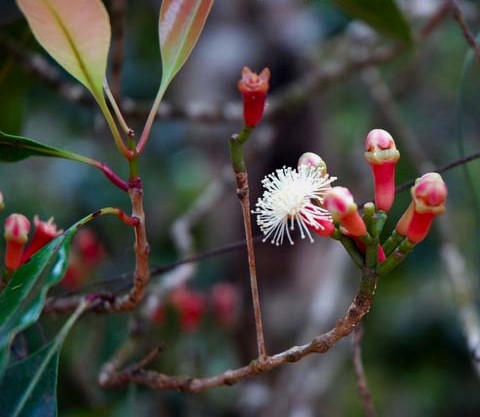
The clove tree (Eugenia caryophyllus) is an elegant, evergreen tree characterized by slender branches and large, light green leaves that taper at the ends. It typically grows to a height of 6-8 meters and produces beautiful, fragrant pink flowers in clusters at the branch ends, followed by purplish red berries. The glossy leaves of the clove tree are about 10 cm long and 5 cm wide, and the entire plant has a glossy appearance.
The tree’s shape is either conical or pyramidal, with numerous straight, opposite branches. The trunk’s wood is hard, and the bark appears smooth and gray. The clove tree bears hermaphroditic flowers that can self-fertilize. During the onset of the rainy season, long green buds emerge, which are the precursors to the aromatic cloves. The entire tree emits a strong and pleasing aroma, especially when the leaves are crushed.
Clove buds
The cloves themselves are incredibly hard and should be stored in dark, airtight conditions to maintain their quality. When powdered, they quickly lose their potency. Cloves are abundant in oil content, and good quality cloves are thick, oily, and have a yellow to dark brown color, readily sinking in water. The finest quality cloves are typically sourced from the Moluccas and East Africa.
However, it’s worth noting that the clove oil is susceptible to adulteration. Often, it is mixed with base oils, allspice, or copaiba oil, which can compromise its purity and potency. So, it’s essential to be cautious about the source and quality of clove oil you obtain.
Cloves are the dried flower buds of the clove tree. Once harvested, these flower buds are carefully dried in the sunlight. The extraction of essential oil from cloves is accomplished through water distillation. Additionally, essential oils can also be extracted from the leaves and bark of the clove tree.

The clove tree thrives in tropical regions, and it starts bearing fruit around its sixth year of life. For optimal growth and productivity, the tree requires a daytime temperature of approximately 27°C and an annual rainfall ranging from 500 to 2500 mm. Once mature, the tree will yield a yearly harvest of 3-5 kg of cloves, and this fruitful phase can last for an impressive 50-60 years.
Initially, the fresh cloves exhibit a pink color, but as they undergo the drying process, they gradually turn brown. The tree’s origin traces back to the Moluccas, where it naturally grows, but it has been cultivated on plantations for over two millennia on islands such as Ternate, Tidore, Bacan, and the West coast of Halmahera.
Clove oil serves multiple purposes: it acts as a flavoring agent, an insecticide, and an anesthetic for relieving toothache and indigestion. Due to its versatile properties, clove oil finds applications in cosmetics, tobacco products, and perfumes.
The harvesting process involves gathering the clove flower buds when they exhibit a yellow to brown–red color. Harvesters climb the trees and use sticks or hooks to pull the bunches of buds out. These buds then fall to the ground, where they are collected and left to dry under the sun.
However, harvesting can be demanding on the tree, causing damage that requires time for recovery. In some cases, this recovery period can be lengthy, leading to the loss of an entire season’s harvest. Hence, the harvesting process must be balanced with the tree’s well-being to ensure sustained productivity over the tree’s long lifespan.
Historical Use
The clove tree has a long history in China, where its oil was utilized for various medicinal purposes. It was used to treat issues like bad breath, bronchitis, diarrhea, hernia, athlete’s foot, and other fungal infections. In Ayurveda, an ancient Indian system of medicine, cloves have been used for centuries as a remedy for digestive and respiratory problems.
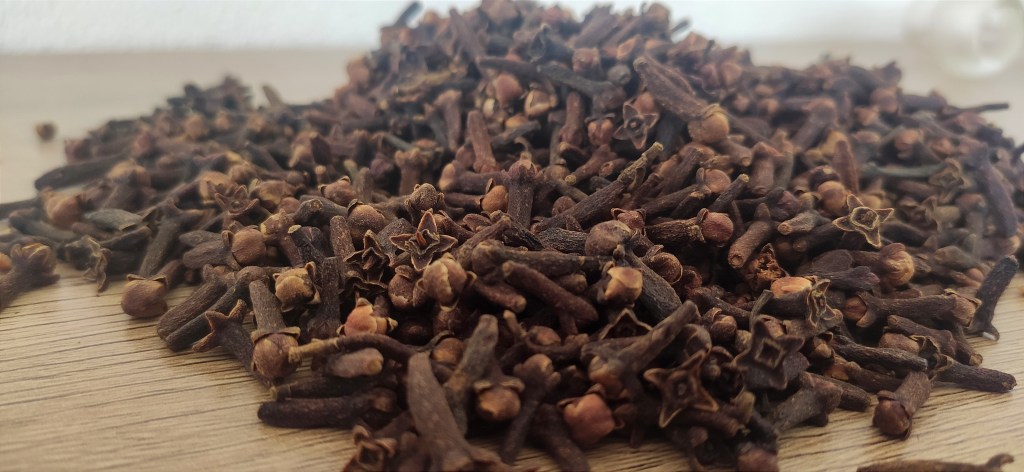
The introduction of cloves to Europe can be attributed to the Arabs. During the Middle Ages, cloves were prized for their diverse therapeutic effects, being used to alleviate headaches, deafness, dropsy, and most notably.. toothaches. Even today, clove oil continues to be an essential component in many dental preparations, given its highly antiseptic and analgesic properties.
Beyond its medicinal uses, clove oil finds applications in perfumery, aromatherapy, and cooking. For centuries, cloves have been incorporated into pomanders, which were used to scent linen. The word “pomander” is derived from the Latin term “pomum,” meaning apple. While oranges are preferred for this purpose due to their ease of use, in the Middle Ages and the Renaissance, apples or pomegranates were also Preferred.
These pomanders were tucked among trousseaus to combat undesirable odors, and some individuals even wore them around their necks on silk ribbons.
In those times, washing was infrequent, so the pomanders played a crucial role in dispelling foul smells. The nobility went a step further, having goldsmiths create elaborate pomanders with openwork compartments, allowing the fragrance of cloves to mix with cinnamon.
Folklore even suggests that merely holding two cloves in the mouth, without chewing or swallowing them, could suppress the desire for alcohol. This demonstrates the significant cultural and historical significance of cloves and their pervasive use in various aspects of life over the centuries.
Clove Buds Essential Oil
Clove essential oil is a complex mixture containing various chemical compounds, each contributing to its unique properties and aroma. Some of the key components found in clove essential oil are as follows:
Sesquiterpenes: Including a- and b-caryophyllene (around 5-10%), a-amorphene, a-cadinene, a-copaen, a-cubebene, a-murolene, humulene, a and b, a-thujene, a-ylangene, astragaline, b-selinene, calacorene, calamenene, campesterol, daucosterol, d-cadinene, and d-cadinol.
Phenols: Predominantly eugenol, making up to 80% of the oil (even higher in leaf oil), along with methyleugenol, myricetin, trans-anethole, isoeugenol, chavicol, and acetyleugenol.
Fenchon: A distinct compound found in the oil.
Aldehydes: Including geranial, hexan-1-al, and vanillin.
Esters: Consisting of eugenyl acetate (approximately 23% of the oil), α-terpinyl acetate, cuminaldehyde, cinnamaldehyde, ethyl phenylacetate, and benzyl acetate.
All these compounds contribute to the various medicinal, aromatic, and culinary properties of clove essential oil. The high content of eugenol makes it a powerful antiseptic and analgesic agent, while other components add to its unique fragrance and flavor.
Clove essential oil possesses a range of therapeutic effects, making it a valuable natural remedy. It acts as a stimulant, providing an overall invigorating effect on the body. Additionally, it demonstrates general health benefits, promoting a sense of well-being.
In terms of digestion, clove essential oil is known to have a positive impact. It aids in easing digestive discomfort and can be helpful in relieving issues like indigestion and bloating. Moreover, clove oil acts as an expectorant, facilitating the removal of excess mucus and promoting respiratory health.
One fascinating attribute of clove is its association with thyroid regulation. Clove is believed to have a positive influence on the thyroid gland, helping to support its proper functioning and potentially aiding in the maintenance of a balanced thyroid activity.
Overall, clove essential oil’s efficacy spans various aspects of health, making it a versatile and beneficial addition to natural health practices. However, it’s essential to use essential oils responsibly.

Clove essential oil exhibits an extensive and diverse range of therapeutic properties, making it highly beneficial in addressing various health conditions. Here are the specific effects and potential applications of clove essential oil:
- Acne: Helps in managing acne-prone skin.
- Aphrodisiac: Possesses properties that may enhance libido and sexual desire.
- Analgesic: Acts as a pain-reliever, easing discomfort.
- Anthelmintic: Aids in expelling intestinal worms.
- Antibacterial: Demonstrates potent broad-spectrum antibacterial action.
- Antiemetic: Helps combat nausea and vomiting.
- Antihistaminic: Assists in reducing allergic reactions.
- Antimycotic: Effective in combating fungal infections.
- Antineuralgic: Provides relief from nerve pain.
- Antioxidant: Helps neutralize harmful free radicals in the body.
- Antiparasitic: Effective against various parasites.
- Antirheumatic: Supports the management of rheumatism.
- Antiseptic: Promotes wound healing and prevents infection.
- Antitumoral: Exhibits potential anti-tumor properties.
- Antiviral: Demonstrates strong antiviral activity.
- Aperitif: Stimulates appetite.
- Arthritis/Arthrosis: Supports management of joint-related issues.
- Asthenia: Helps combat weakness and fatigue.
- Asthma: May provide relief from asthma symptoms.
- Bactericide: Effective against various bacterial strains, including Escherichia coli, Staphylococcus aureus, and Proteus species.
- Uterus and ovarian inflammation: Can aid in managing inflammation in the female reproductive system.
- Childbirth, overdue: May be beneficial in inducing labor in overdue pregnancies.
- Cystitis: Assists in managing inflammation of the bladder.
- Bruises: Helps alleviate bruising and promote healing.
- Retching: Eases feelings of nausea and retching.
- Burns: Provides relief and supports healing for burns.
- Bronchitis: Helps ease symptoms of bronchitis.
- Carminative: Helps in relieving gas and bloating.
- Cholera: May aid in managing cholera symptoms.
- Colitis: Can be effective in managing both bacterial and spastic colitis.
- Intestinal gases / cramps: Provides relief from gas-related discomfort.
- Diarrhea: Helps alleviate diarrhea symptoms.
- Digestive: Supports healthy digestion.
- Dysentery: Assists in managing dysentery symptoms.
- Dyspepsia: Helps with indigestion.
- Appetite stimulant: Stimulates the appetite.
- Emmenagogue: Helps promote menstruation.
- Enterocolitis: Beneficial in managing inflammation of the intestines and colon.
- Expectorant: Aids in clearing respiratory mucus.
- Flatulence: Provides relief from excessive gas.
- Fungicide: Effective against various fungal infections.
- Memory disorders: May help improve memory function.
- Gingivitis: Supports the management of gum inflammation.
- Flu: May provide relief from flu symptoms.
- Halitosis: Helps combat bad breath.
- Hepatitis: Shows potential in managing viral hepatitis.
- Herpes Zoster: May help alleviate symptoms of shingles.
- Skin diseases, skin parasites: Effective in managing skin diseases and parasites.
- Hypotensor: Supports the management of low blood pressure.
- Infections: Helps combat various infections.
- Insecticide: Effective in repelling insects.
- Colic: Provides relief from colic pain.
- Low blood pressure: May help regulate blood pressure levels.
- Larvicide: Effective in destroying larvae.
- Liver enhancing: Supports liver health and function.
- Malaria: May be beneficial in managing malaria symptoms.
- Multiple sclerosis: May offer support in managing multiple sclerosis.
- Neuroinflammation, viral: Assists in reducing viral-related neuroinflammation.
- Nerve pain: Provides relief from nerve-related pain.
- Lack of potency: May help address issues related to reduced sexual potency.
- Rheumatism: Supports the management of rheumatic conditions.
- Rubefacient: Stimulates blood circulation when applied to the skin.
- Scabies: Effective in managing scabies infestations.
- Sinusitis: Assists in easing symptoms of sinusitis.
- Cuts: Promotes healing of cuts and wounds.
- Spasmolytic: Helps in reducing muscle spasms.
- Digestive disorders: Supports the management of various digestive issues.
- Stimulant (at high dose): Acts as a stimulant when used in higher concentrations.
- Stomachic: Supports the health of the stomach.
- Toothache: Provides relief from toothache.
- Gingivitis: Helps in managing gum inflammation.
- Tonic (general and uterus): Acts as a general tonic for overall well-being and uterine health.
- Tonsillitis: Beneficial in managing tonsillitis symptoms.
- Tuberculosis: May offer support in managing tuberculosis.
- Uterotonic: May help stimulate contractions of the uterus.
- Colds: Provides relief from common cold symptoms.
- Chronic fatigue: May assist in managing chronic fatigue.
- Strains: Helps in alleviating strains and muscular discomfort.
- Sprains: Aids in reducing pain and inflammation from sprains.
- Wounds: Supports wound healing.
- Vermifuge: Helps expel intestinal parasites.
It’s important to note that while clove essential oil offers a wide array of potential benefits, its application should be done with caution and under appropriate guidance.
Applications
Clove essential oil offers a range of beneficial properties, making it a versatile and valuable natural remedy. Here are some of its key uses and precautions:
- Vermifuge and insect repellent: Clove essential oil effectively expels intestinal parasites and repels mosquitoes, moths, and mice.
- Evaporating: When used in diffusers, clove oil purifies the air, stimulates the mind, helps combat insects, and offers relief from respiratory diseases and bronchitis.
- Skin care: Clove oil is effective in managing various skin conditions, including fungi, athlete’s foot, skin parasites, scabies, and shingles. It can be used as a compress for poorly healing wounds.
- Analgesic: Clove oil serves as a pain–reliever and can be applied topically to alleviate toothaches, arthritis, rheumatic pains, sprains, and strains.
- Baths: Clove oil can be added to baths to provide relief from conditions like flu, cold, shingles, rheumatism, and fatigue.
It’s important to use clove oil with caution due to its potential to irritate the skin and mucous membranes. To avoid skin irritation, use a low percentage of the oil and dilute it well in substances like honey, coffee creamer, fatty oils, or a neutral shampoo.
When using clove oil internally, it should be done under supervision and in moderate amounts. Internal use can help with conditions such as asthenia, flatulence, lung disorders, cancer, stomach complaints, cramps, diarrhea, and nerve pains. A recommended dosage is 1-2 drops, taken three times a day after meals, mixed with honey and dissolved in warm milk or vegetable oil.

For mental well-being, cloves can be useful when feeling tired or depressed. The oil has a strong and protective effect on the psyche, fostering a balanced and harmonious atmosphere. It also boosts self-healing abilities and enhances self-esteem.
However, there are several contraindications and precautions associated with clove oil usage. It should not be applied undiluted to the skin, as it can be irritating. Clovebuds and stem oil have been known to cause dermatitis. It is advisable to use the oil in a dilution and avoid prolonged usage.
Internal use of clove oil should be avoided for children, pregnant or breastfeeding individuals. Overdosing through vaping can lead to headaches and negative reactions. Additionally, eugenol, a primary component of clove oil, can interfere with platelet function, so it should not be used in combination with Heparin and Aspirin. People with slow blood clotting should also refrain from using clove oil internally. Moreover, individuals with liver and kidney disease should avoid using the oil, and it should not be combined with painkillers or used by diabetics.
Clove essential oil blends harmoniously with bergamot, geranium, laurel, lavandin, lavender, rose, vanilla, and ylang-ylang oils, creating delightful and complementary aromatic combinations.
Here are some effective applications of clove essential oil:
- Toothache relief: When experiencing toothache, applying 1 drop of clove oil directly onto the painful tooth can provide a potent anesthetic effect, easing discomfort.
- Soothing inflamed gums: Add 1 drop of clove oil to your toothbrush and gently brush your inflamed gums for relief.
- Rheumatic complaints: For managing rheumatic pain, create a blend using 5 drops of clove oil, 13 drops of geranium oil, 8 drops of lavender oil, and 8 drops of eucalyptus oil, mixed with 10 ml of St. John’s wort oil and 40 ml of base oil. Massage this mixture onto the painful areas daily for effective relief.
- Evaporating: In an aroma lamp, diffuse 8 drops of clove oil to aid in the healing of mental and physical old wounds and alleviate persistent pains. This aromatic therapy also enhances self-healing capabilities and boosts self-esteem.
- Mosquito and insect repellent: Combine 5 drops of clove oil, 3 drops of eucalyptus oil, 2 drops of geranium oil, and 4 drops of cedar oil to create a potent blend that effectively repels mosquitoes and other insects when vaporized.
By following these application techniques, you can harness the therapeutic benefits of clove essential oil and enjoy its soothing and healing properties in various aspects of your well-being. Remember to use essential oils responsibly and seek professional advice when needed, especially for therapeutic purposes.
 Herbal Panda
You must be logged in to post a comment.